King Comforters, Rugs, and Curtains: Why Commercial Washers Handle Bulky Household Items Better Than Home Machines
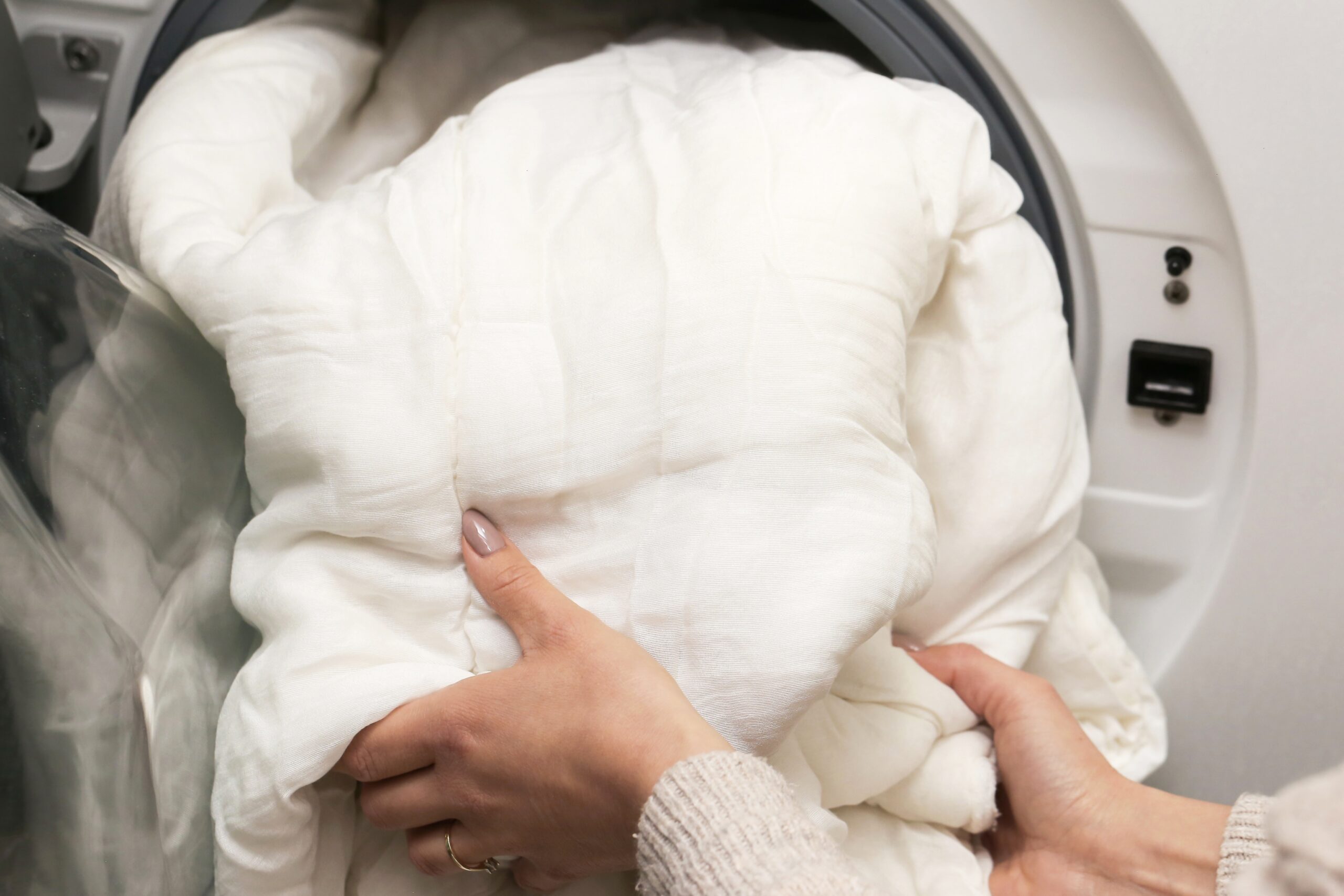
If you’ve ever stuffed a king comforter into a home washer and watched the machine thump its way across the floor, you already know the problem. A commercial laundry service, like Sector Bay Laundry Company, uses washer-extractors built for weight, water volume and spin force that residential machines were never designed to handle. That difference is why bulky household items come back cleaner, drier and in better shape than they would after a weekend of home attempts.
Seasonal bedding, area rugs, blackout curtains and winter coats all share the same trait: they absorb enormous amounts of water and need room to move. Below is what actually happens inside each type of machine, and how to decide when an item belongs somewhere other than your laundry room.
The Real Problem Isn’t Weight, It’s Water
A dry king comforter usually weighs somewhere between 7 and 12 pounds. Saturated, that same comforter can hold three to four times its own weight in water, which puts a 30 to 45 pound wet mass inside a drum rated for far less.
Most residential washers in American homes fall between 3.5 and 5.2 cubic feet of drum capacity, with a recommended dry load of roughly 12 to 20 pounds. The comforter fits in a technical sense. It just doesn’t have room to tumble, and tumbling is how detergent and water actually reach the fill.
When an item can’t move, three things go wrong at once:
- Poor soil removal, because mechanical action never reaches the interior of the item
- Detergent residue trapped in baffles and seams, which stiffens fabric and attracts dirt faster the next time
- Off-balance loads that trigger error codes, extend cycles or damage suspension components over time
How Commercial Washer-Extractors Are Built Differently
Capacity measured in pounds, not cubic feet
Commercial machines are rated by dry load weight, commonly from 20 pounds up to 80 pounds or more per pocket. A single 60 pound washer can hold what would take four or five careful home loads, and it leaves the item enough space to unfold and roll during the wash.
That extra room matters most for anything with batting or backing. Down clusters, polyester fill and rug foundations only release embedded grit when water can flush through them repeatedly.
Extraction force that home machines can’t match
High-speed commercial extractors typically generate 200 to 400 G-force during the final spin, pulling moisture retention down toward 50 percent or lower. Many home washers land well below that, which is why a comforter comes out of a residential machine heavy, dense and still dripping.
Lower retained moisture means shorter drying time, and shorter drying time means less heat exposure for delicate fills and rug backings. A professional commercial laundry service in Delaware County can pair that extraction with large-capacity dryers that keep items moving instead of baking in a tight tumble.
Programmable water levels, temperature and chemistry
Commercial controls let an operator set specific fill levels, wash temperatures and multiple rinse steps per item type. A down comforter might get a low-alkaline detergent and three rinses; a cotton area rug might get a warmer wash and a different cycle entirely.
The American Cleaning Institute notes that rinse thoroughness is one of the biggest factors in whether detergent residue stays behind, and residue is exactly what makes bulky bedding feel gritty or smell stale weeks later.
Item by Item: What Actually Goes Wrong at Home
King and California king comforters
These are the single most common casualty. A down or down-alternative comforter forced into a small drum tends to clump, and clumped fill dries unevenly, which creates the damp musty pockets that show up a week later.
Commercial equipment keeps the fill distributed through the wash and the dry, so the baffles refill evenly. Most bedding of this size does best with a full wash and dry every three to six months, plus a duvet cover laundered every few weeks.
Area rugs and runners
A wool or cotton 8×10 rug can weigh 40 to 60 pounds dry and considerably more once soaked, which is already past the structural limits of a typical residential washer. Rug backings also shed sand and grit that can settle into a home machine’s pump and drain lines.
Washable flatweaves, cotton runners and synthetic indoor-outdoor rugs generally handle commercial washing well. Hand-knotted, antique, jute and anything with a stiff latex backing should be evaluated first, because those often need specialty rug cleaning instead.
Curtains, drapes and blackout panels
Long panels are light but enormous in volume, and they wrinkle badly when crowded. Blackout curtains carry an acrylic or thermal coating that can crack under high heat or aggressive agitation in a tight drum.
Large-capacity machines let full-length panels hang and turn freely, and lower-heat drying protects the coating. Curtains also collect far more dust than people expect, which is worth knowing if anyone in the house has allergies.
Winter coats, sleeping bags and mattress pads
Insulated outerwear and sleeping bags face the same clumping issue as comforters, with the added risk of crushed loft. Once down loses loft, the item loses most of its insulating value, and the EPA’s indoor air quality guidance is a reasonable reminder that textiles are a meaningful reservoir for dust and allergens in the home.
Mattress pads and featherbeds are heavy, absorbent and slow to dry, which is a bad combination for a home dryer running a 90 minute cycle three times in a row.
Warning Signs Your Home Machine Is Losing
- The washer walks, bangs or shuts down mid-cycle on large loads
- Items come out of the dryer damp in the center after two or more full cycles
- Bedding smells faintly sour or musty within days of washing
- Fill migrates to one end of a comforter or coat and stays there
- Water pools on top of the load instead of draining through it
Any two of those together usually mean the item exceeds what the machine can process, not that the machine is broken.
What to Expect When You Send Bulky Items Out
Most professional operations sort by fabric, fill and construction before anything gets loaded, then match the item to a machine size and cycle. Turnaround on oversized household items commonly runs one to three business days, longer during the fall and spring changeover rushes when everyone swaps their bedding at once.
Scheduling laundry pickup in Delaware County, PA removes the awkward part of the process, since hauling three wet comforters to a car is the reason most people put this off in the first place.
How to Prep Bulky Items Before Drop-Off
- Check the care label and photograph it if the item is expensive or unusual
- Point out stains by location and, if you know it, by source, since protein, oil and tannin stains need different treatments
- Shake out loose debris from rugs and curtains outdoors
- Remove hardware such as curtain hooks, rings and detachable fur trim
- Flag repairs like open seams or torn baffles, because washing will make a small tear a large one
Ready to Get Your Bulky Items Handled Properly?
If your comforters, rugs or curtains have been sitting in a pile because they won’t fit the washer, we’ll sort, wash and dry them on equipment built for the job. Contact Sector Bay Laundry Company today to talk through your items and set up a drop-off or pickup that fits your schedule.